
 Protect the investment
Overview
Small cracks, big consequences
Cracks are how asphalt fails. Water runs into an open crack and soaks the base below, then freezes and expands. In a Northern Indiana winter that cycle repeats again and again, and each round pries the crack wider, loosens the edges and softens the base until it breaks out into a pothole. Sealing cracks while they're still narrow is the least expensive maintenance you can do for any driveway or parking lot.
We match the repair to the damage. Open cracks are cleaned out with compressed air and sealed with hot-pour rubberized sealant that stays flexible as the pavement expands and contracts. Wider cracks are filled and banded. Alligator cracking and potholes mean the base has failed, so those areas are cut out, rebuilt and patched with new hot-mix asphalt rather than just filled. When we're done, the repairs are ready to sealcoat or simply leave as they are.
What it looks like
See asphalt crack repairs in action
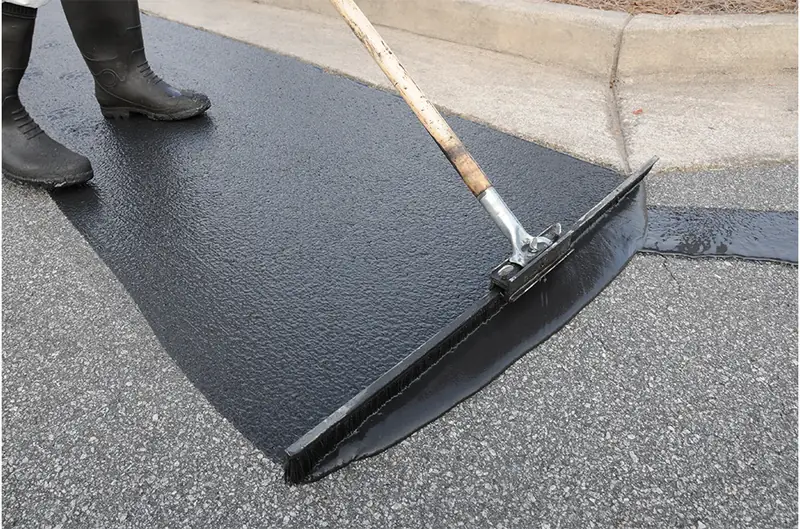
Hot-pour crack sealant being applied along a pavement crack with a sealing shoe.
Hot-pour crack sealing, crack filling and pothole patching that keep water out and stop small damage from spreading.
Step by step
Our asphalt crack repairs process
Clean the cracks
Dirt, weeds and loose material are blown out so the sealant can bond.
Seal or fill
Hot-pour sealant goes into working cracks; wider cracks are filled and banded.
Patch failures
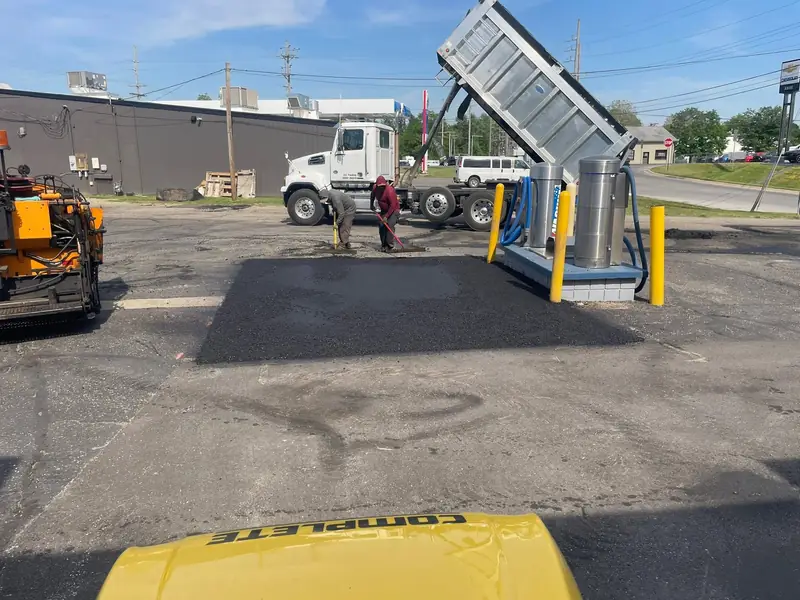
Potholes and alligator cracking are cut out, rebuilt and patched with hot mix.
Protect
Repairs can be sealcoated for a uniform finish and extra protection.
Is it time?
Repair it now if you see
- Open cracks wider than about ¼ inch
- Grass or weeds growing through the pavement
- Alligator or spiderweb cracking
- Potholes or crumbling edges
- Cracks that have widened since last winter
FAQ
Asphalt Crack Repairs questions
More answers on our FAQ page, or call (574) 350-4142.
What's the difference between crack sealing and crack filling?
Crack sealing uses a flexible, rubberized hot-pour material on cracks that move as temperatures change, so the seal stretches instead of breaking. Crack filling is for wider, more stable cracks and focuses on filling the void. We use whichever fits the crack, and often both on the same job.
When is the best time to seal cracks?
Spring and fall are ideal. Cracks open wider in cool weather and close up in summer heat, so sealing in the shoulder seasons fills them more completely. That said, a crack sealed in July beats one left open all winter.
Can you fix potholes permanently?
A pothole is a symptom of base failure, so the lasting fix is to cut out the damaged area, recompact or replace the base and pave a new hot-mix patch. Cold patch thrown in a hole is a temporary stopgap at best.
Keep exploring
Related services
Protect the investment
 Curb appeal that lasts
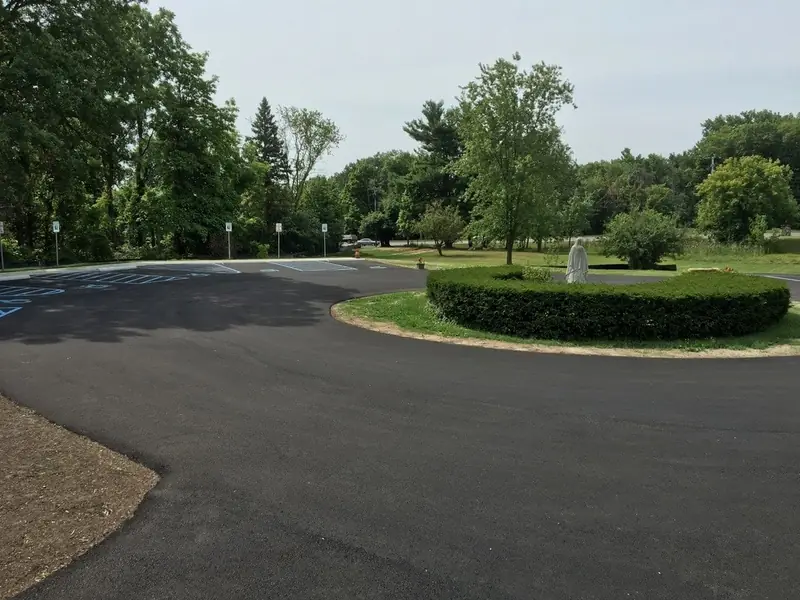
Parking Lot Sealcoating
Commercial sealcoating applied in sections or after hours, with crack filling and restriping in the same visit. Learn more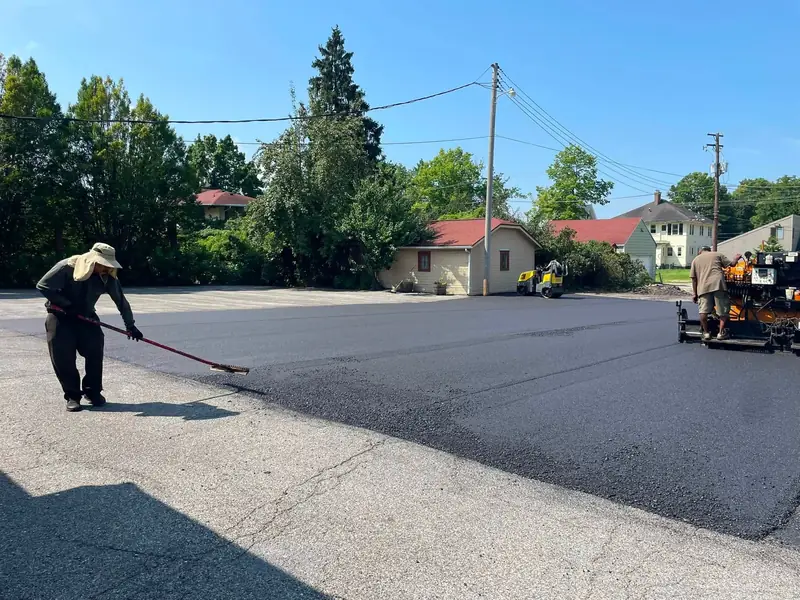 New asphalt over sound pavement
Asphalt Overlay
A new 1½ to 2 inch layer of hot mix bonded over existing pavement, with milled edges and smooth transitions. Learn moreWe offer asphalt crack repairs in all 90 towns we serve, including:
- Elkhart, IN
- South Bend, IN
- Mishawaka, IN
- Goshen, IN
- Warsaw, IN
- Kalamazoo, MI
- La Porte, IN
- Michigan City, IN
- Plymouth, IN
- Niles, MI
- St. Joseph, MI
- Portage, MI
Free estimates
Get a free asphalt crack repairs estimate
Tell us a little about your project and we'll get back to you to set up a time to look at it. Prefer to talk? Call or text anytime during business hours.
Call or text(574) 350-4142- We call you back to talk through the job
- We visit, measure and look at drainage and the base
- You get a clear, written estimate, free