
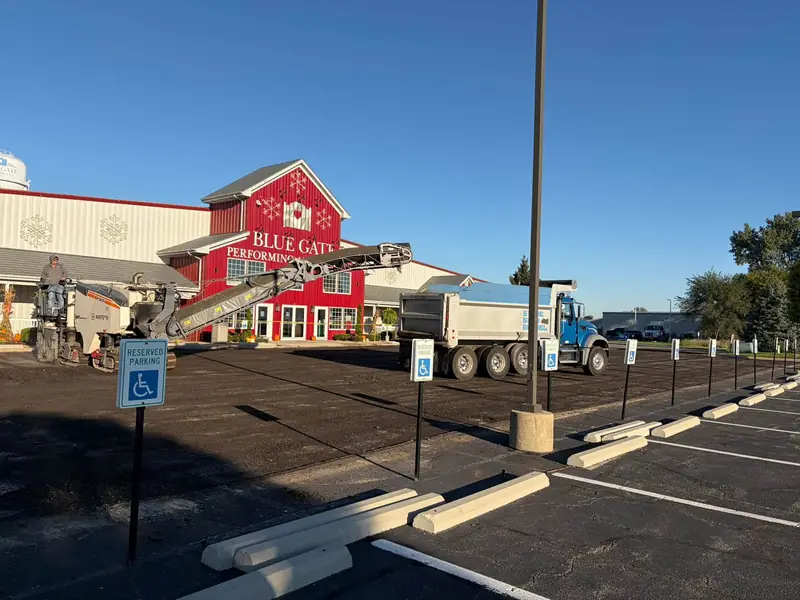
 A new surface, not a new lot
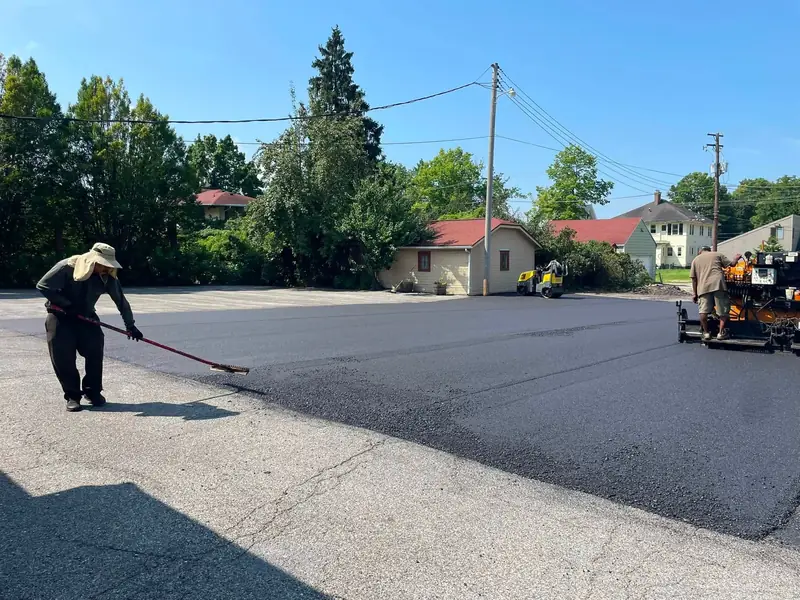
Overview
An overlay is only as good as its prep
An overlay is exactly what it sounds like: a new layer of asphalt, usually about 1½ to 2 inches thick, placed over existing pavement. Done right, it seals the old surface, smooths out roughness and gives you a brand-new look and ride. Done wrong, old cracks reflect up through the new layer within a season or two, and the extra height leaves lips at garage floors and curbs.
Doing it right comes down to preparation. We repair failed areas first, fill significant cracks, sweep the surface clean and spray a tack coat so the new asphalt bonds to the old instead of sliding on it. Where the overlay meets a garage floor, sidewalk, curb or street, we mill or saw-cut a joint so the new surface ties in flush instead of leaving a bump. Low spots get a leveling course first, so the finished surface drains.
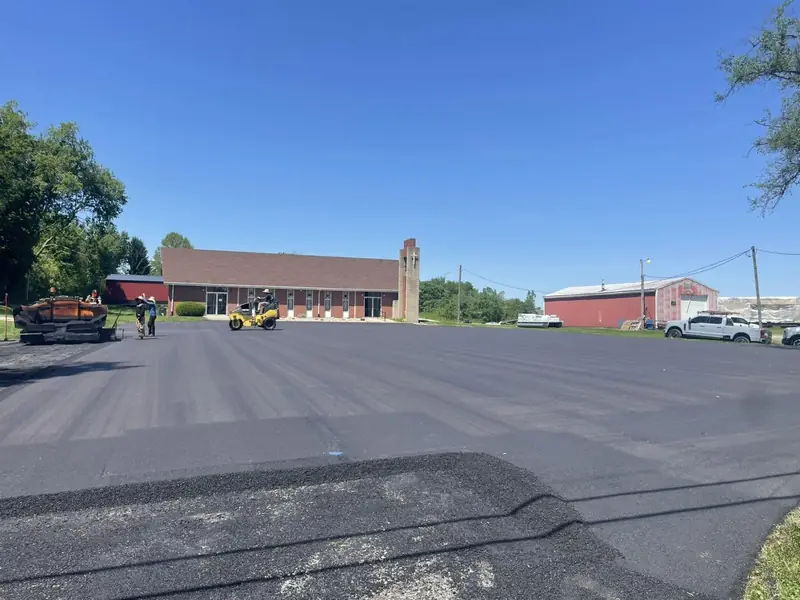
On the job
A new layer over a sound base
A new 1½ to 2 inch layer of hot mix bonded over existing pavement, with milled edges and smooth transitions.
See our project galleryBefore & after
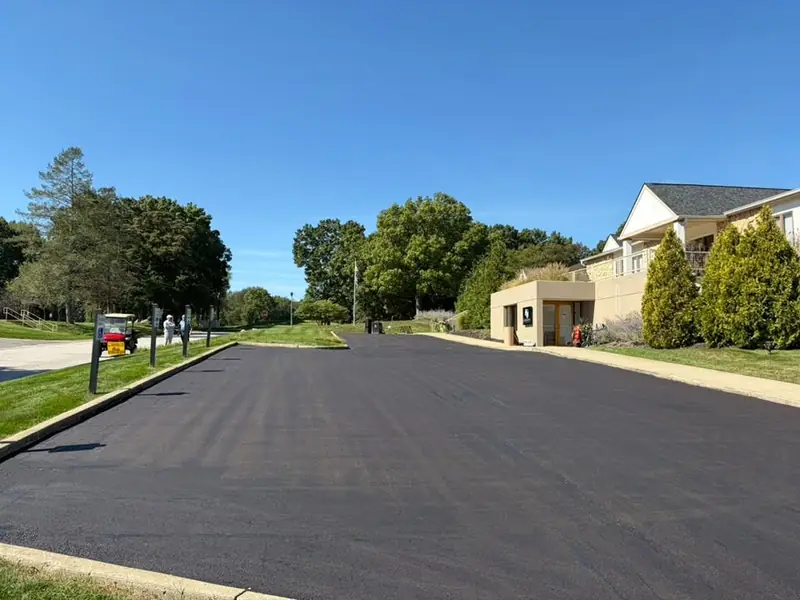
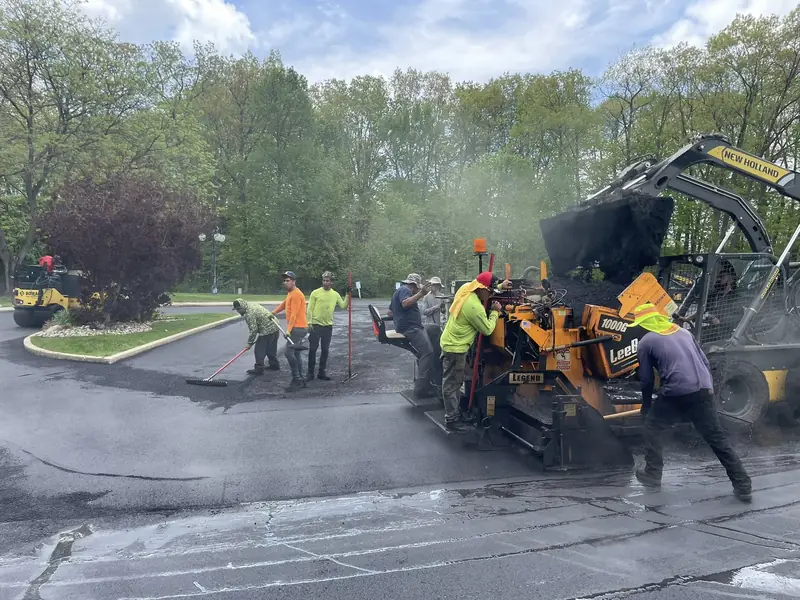
A country club drive, leveled and re-capped

Step by step
Our asphalt overlay process
Repair
Failed areas are patched and big cracks are filled so they don't telegraph through.
Clean and tack
The surface is swept and sprayed with tack coat so the layers bond.
Mill the joints
Edges at doors, curbs and streets are milled so the new surface ties in flush.
Pave and roll
The new layer is laid with the paver and compacted smooth.
Is it time?
An overlay makes sense when
- The pavement is structurally sound but rough or worn
- Cracking is surface-level, not base failure
- A little added height won't cause drainage problems
- You want a new surface without the cost of tear-out
- The lot or drive needs a fresh look on a tight timeline
FAQ
Asphalt Overlay questions
More answers on our FAQ page, or call (574) 350-4142.
Will the old cracks come back through the overlay?
Some reflective cracking can show up over time, especially over wide or active cracks. Repairing failed areas and filling cracks before we pave slows it down a great deal, which is why we never skip the prep.
How thick is an asphalt overlay?
Most overlays are about 1½ to 2 inches of compacted asphalt, and heavier-traffic areas may get more. Where the extra height would cause a problem at doors, curbs or drains, we mill the edges so the finished surface ties in flush.
Can you overlay concrete?
Asphalt can be placed over concrete in some cases, but the joints in the concrete tend to show through as cracks. We'll look at the slab and tell you honestly whether an overlay or removal is the better choice.
Keep exploring
Related services
A new surface, not a new lot
 Repave without the shutdown
Parking Lot Paving
Repaving, base repair and patching for existing lots, phased around your business so customers can still get in. Learn more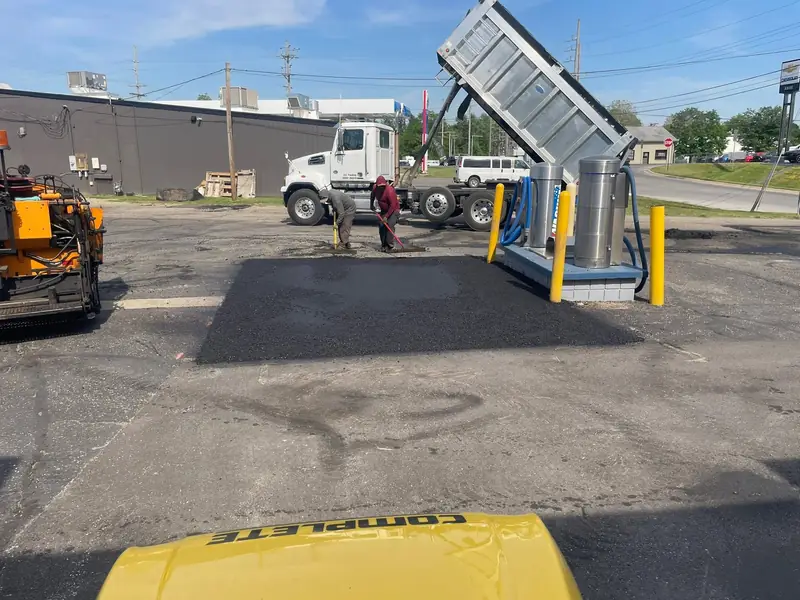 Stop water at the source
Asphalt Crack Repairs
Hot-pour crack sealing, crack filling and pothole patching that keep water out and stop small damage from spreading. Learn moreWe offer asphalt overlay in all 90 towns we serve, including:
- Elkhart, IN
- South Bend, IN
- Mishawaka, IN
- Goshen, IN
- Warsaw, IN
- Kalamazoo, MI
- La Porte, IN
- Michigan City, IN
- Plymouth, IN
- Niles, MI
- St. Joseph, MI
- Portage, MI
Free estimates
Get a free asphalt overlay estimate
Tell us a little about your project and we'll get back to you to set up a time to look at it. Prefer to talk? Call or text anytime during business hours.
Call or text(574) 350-4142- We call you back to talk through the job
- We visit, measure and look at drainage and the base
- You get a clear, written estimate, free