
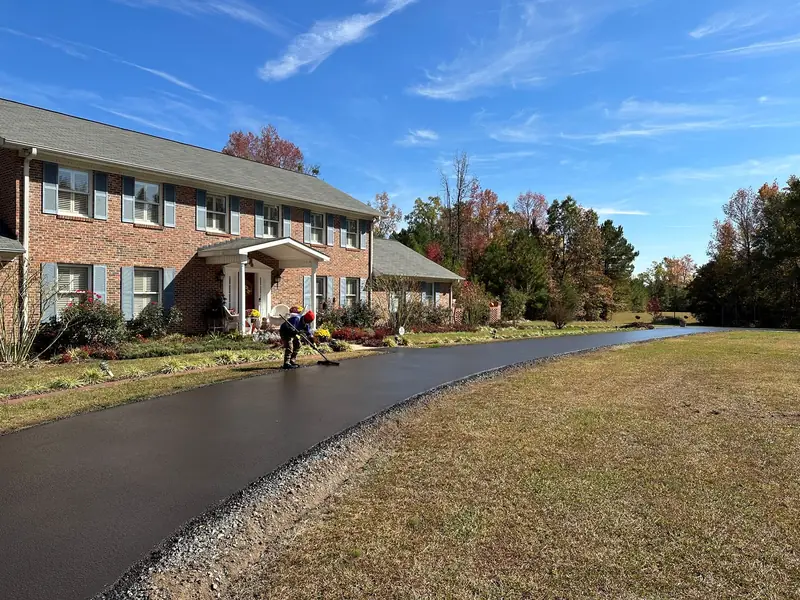
 That fresh-paved look
Overview
Why sealcoating matters
Asphalt is held together by a liquid binder, and from the day it's laid that binder starts drying out. Sunlight oxidizes the surface until it turns gray and brittle, water works into the pores, and gas, oil and winter road salt eat away at what's left. Sealcoating puts a fresh protective layer on top, so the weather wears down the sealer instead of your pavement.
A good sealcoat job is mostly preparation. We clean the surface, treat oil spots so the sealer bonds, and fill cracks first so water can't get under the new coat. Then the sealer goes on in even coats with crisp, hand-cut edges along garages, curbs and walks. Done every few years, it's one of the least expensive ways to add years to a driveway or parking lot.
What it looks like
See asphalt sealcoating in action
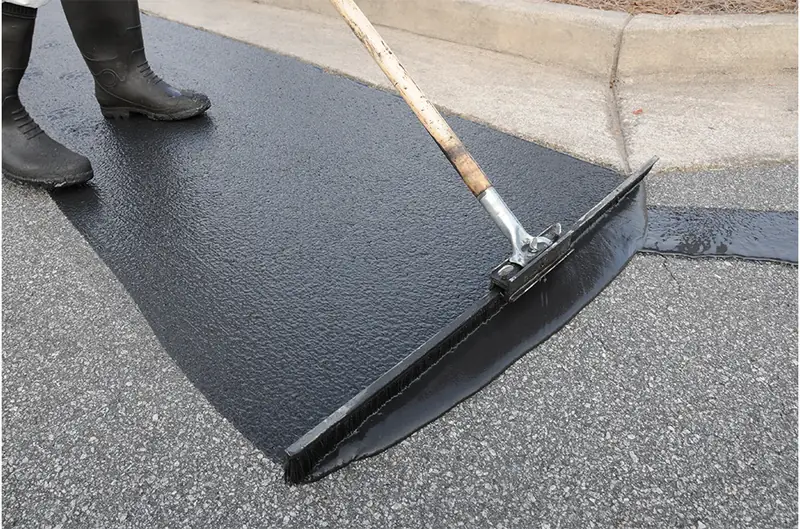
Spray wand laying fresh sealcoat on a residential driveway, black next to faded gray.
What a fresh coat does
- Slows the natural wear and drying-out of the asphalt
- Keeps the surface from fading to gray
- Helps the dark surface warm up and melt snow faster
- Gives the whole property a sharp, cared-for look
Step by step
Our asphalt sealcoating process
Clean
Blow off and sweep the surface, trim back the edges and scrape off anything stuck to the pavement.
Repair
Fill cracks and prime oil stains so the new coat bonds and water stays out.
Seal
Apply the sealer evenly, cutting in by hand along garage floors, sidewalks and curbs.
Cure
Block off the surface while it cures, then reopen once it's ready for traffic.
Is it time?
Signs it's time to seal
- The surface has faded from black to gray
- Hairline cracks are starting to show
- Loose stones are appearing on the surface
- Oil and gas stains are soaking in
- It has been two or three years since the last coat
FAQ
Asphalt Sealcoating questions
More answers on our FAQ page, or call (574) 350-4142.
How often should asphalt be sealcoated?
Every two to three years for most driveways and parking lots, depending on traffic, sun exposure and how much road salt the surface sees. Sealing too often can build up a layer that cracks and peels, so we'll tell you honestly if you can wait.
How long after paving should I wait to seal?
New asphalt needs time to cure. We recommend waiting at least six months, and up to a year, after paving before the first sealcoat.
What weather do you need to sealcoat?
Dry pavement, temperatures of at least 50°F and rising, and no rain in the forecast for about a day. That's why sealcoating season here runs roughly from May into early October.
Keep exploring
Related services
That fresh-paved look
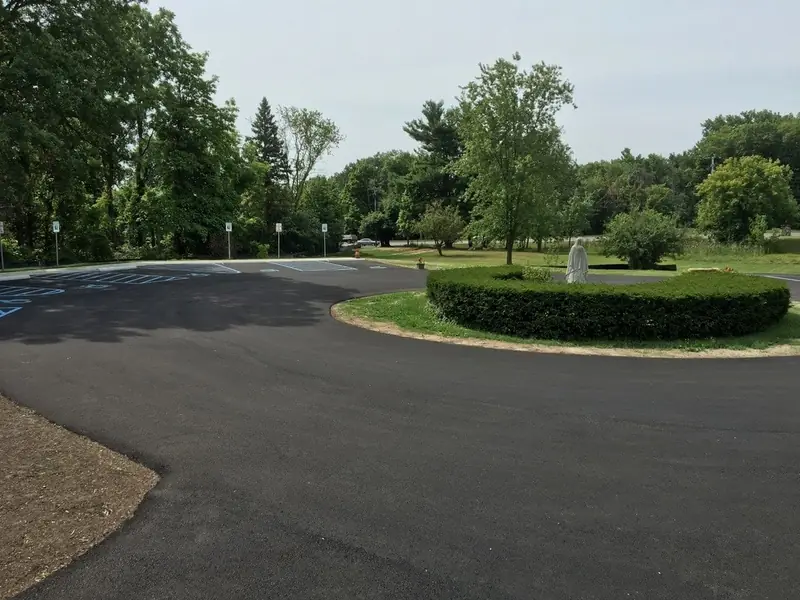 Curb appeal that lasts
Parking Lot Sealcoating
Commercial sealcoating applied in sections or after hours, with crack filling and restriping in the same visit. Learn more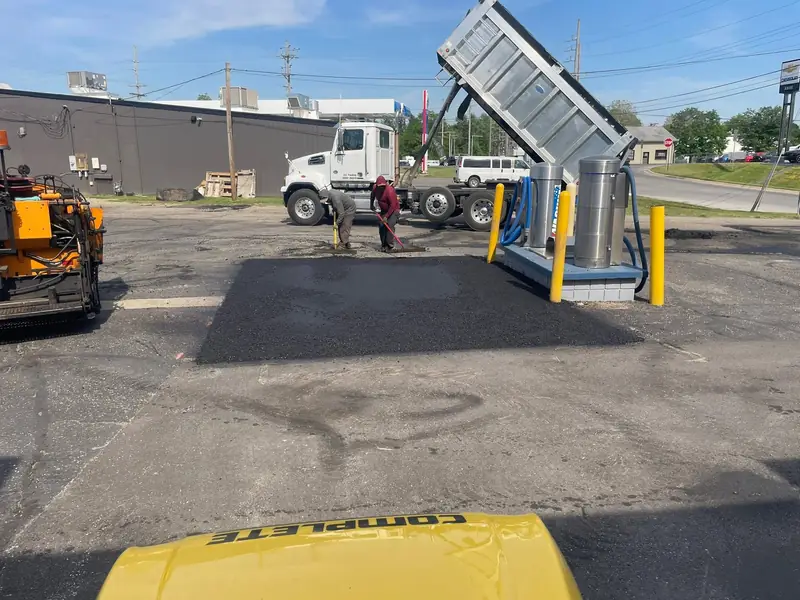 Stop water at the source
Asphalt Crack Repairs
Hot-pour crack sealing, crack filling and pothole patching that keep water out and stop small damage from spreading. Learn moreWe offer asphalt sealcoating in all 90 towns we serve, including:
- Elkhart, IN
- South Bend, IN
- Mishawaka, IN
- Goshen, IN
- Warsaw, IN
- Kalamazoo, MI
- La Porte, IN
- Michigan City, IN
- Plymouth, IN
- Niles, MI
- St. Joseph, MI
- Portage, MI
Free estimates
Get a free asphalt sealcoating estimate
Tell us a little about your project and we'll get back to you to set up a time to look at it. Prefer to talk? Call or text anytime during business hours.
Call or text(574) 350-4142- We call you back to talk through the job
- We visit, measure and look at drainage and the base
- You get a clear, written estimate, free