
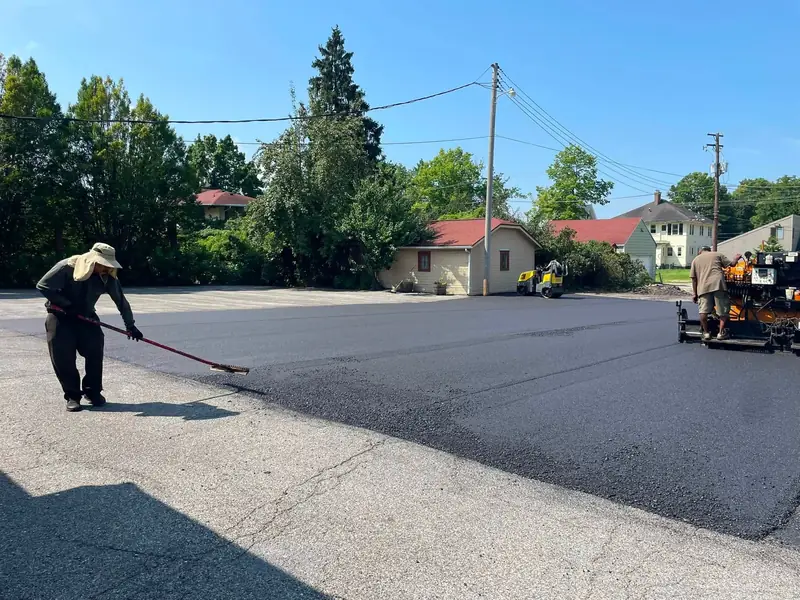
 New asphalt over sound pavement
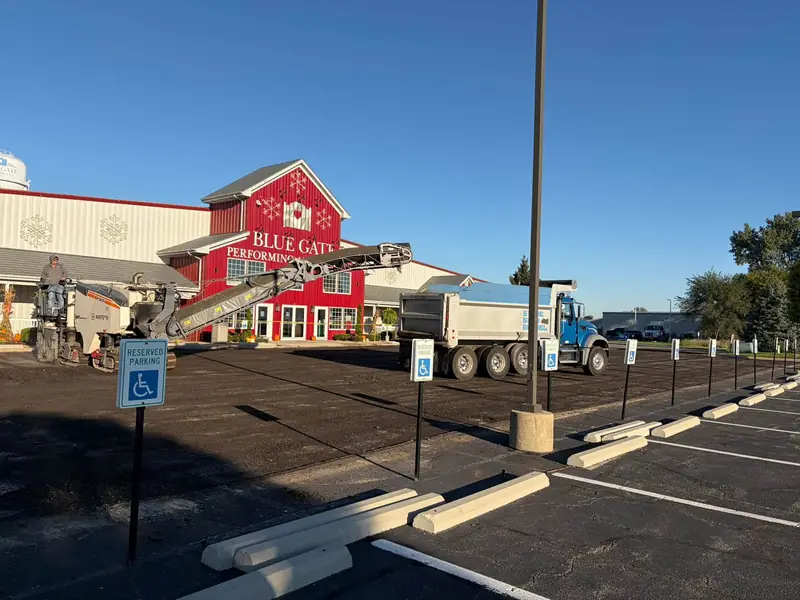
Overview
New pavement on the base you already have
Asphalt wears from the top down. Years of sun, traffic and freeze-thaw cycles leave the surface oxidized, cracked and rough, even when the base and soil below are still doing their job. In that situation tearing everything out is unnecessary. Resurfacing removes or covers the worn top and replaces it with a new surface layer, so you get smooth, fresh-looking pavement without paying to rebuild what's still good.
There are two main ways to resurface. Milling grinds off the worn top so new asphalt can go back at the same height, which matters along curbs, garage floors and drains. An overlay places new asphalt directly on top of the old after it's cleaned and tacked, which works where a little extra height isn't a problem. Many jobs combine the two, milling at edges and transitions and overlaying in between. We'll recommend the approach that fits your pavement and your budget.
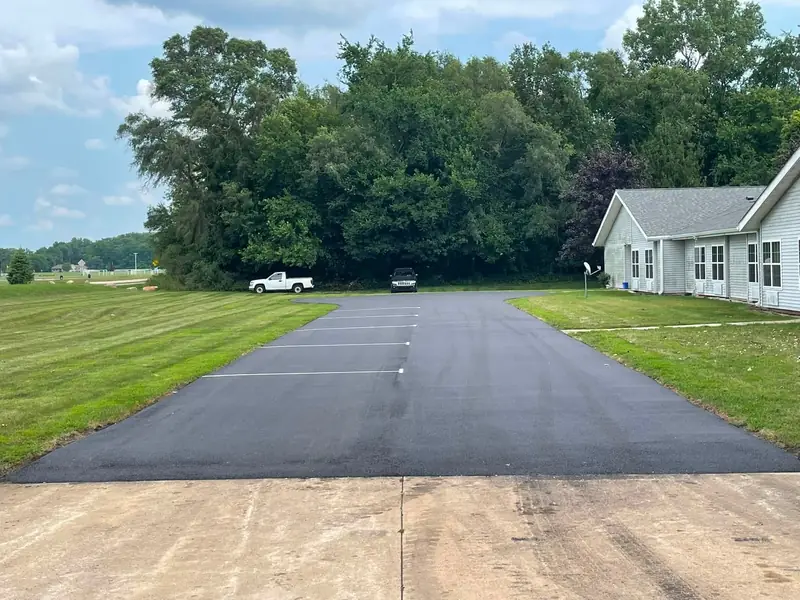
Before & after
A tired entrance drive, made new

Step by step
Our asphalt resurfacing process
Inspect
We check whether the base is sound enough to resurface, and where repairs are needed first.
Repair and mill
Failed spots are rebuilt and edges or transitions are milled down.
Tack and pave
A tack coat goes down, followed by the new layer of hot mix.
Compact and finish
The new surface is rolled tight and tied in cleanly at every edge.
Is it time?
Good candidates for resurfacing
- Surface cracking without sunken or soft areas
- Faded, rough or raveling pavement
- Old patches that make the surface uneven
- Pavement that drains well but looks tired
- Sound pavement that sealcoating can no longer rescue
FAQ
Asphalt Resurfacing questions
More answers on our FAQ page, or call (574) 350-4142.
How long does resurfacing last?
A properly installed resurfacing job on a sound base can last many years, especially when it's crack sealed and sealcoated on schedule. The condition of the base underneath matters most, which is why we inspect it first.
What's the difference between resurfacing and replacement?
Resurfacing replaces the top layer and keeps the existing base. Replacement removes everything down to the soil and rebuilds. If the base is failing, resurfacing won't hold up, so we only recommend it when the structure underneath is sound.
Is resurfacing cheaper than replacing?
Usually, yes. Because the base stays and there's far less excavation and hauling, resurfacing typically costs considerably less than full replacement.
Keep exploring
Related services
New asphalt over sound pavement
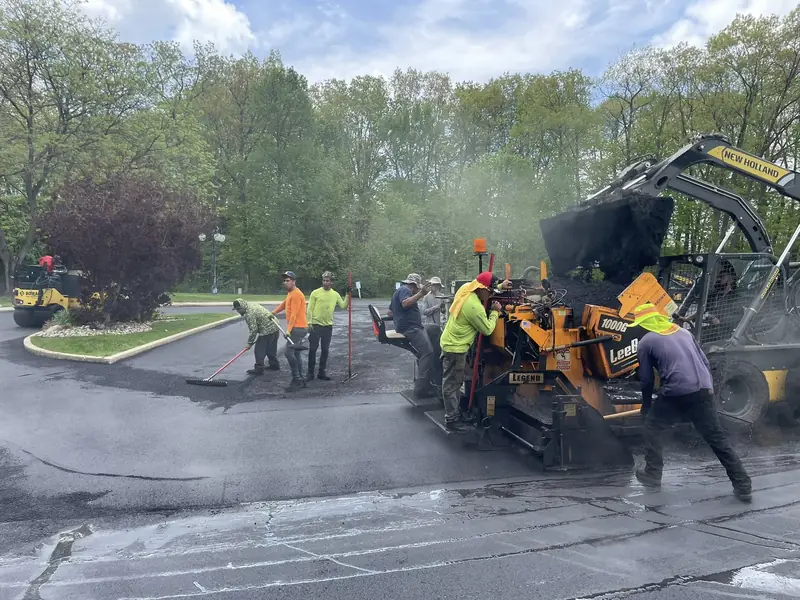 Repave without the shutdown
Parking Lot Paving
Repaving, base repair and patching for existing lots, phased around your business so customers can still get in. Learn more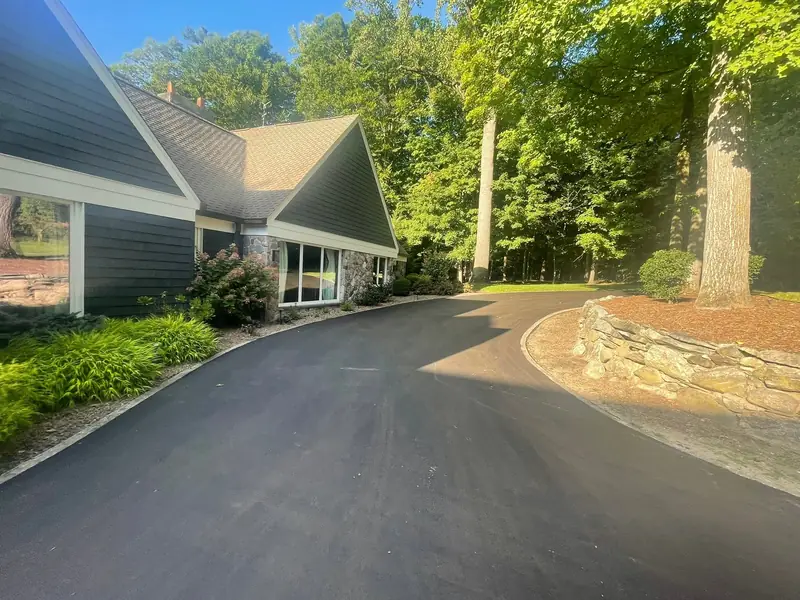 Replace the old, pave the new
Driveway Paving
Repaving and full replacement for worn-out asphalt or concrete driveways, including widening and parking pads. Learn moreWe offer asphalt resurfacing in all 90 towns we serve, including:
- Elkhart, IN
- South Bend, IN
- Mishawaka, IN
- Goshen, IN
- Warsaw, IN
- Kalamazoo, MI
- La Porte, IN
- Michigan City, IN
- Plymouth, IN
- Niles, MI
- St. Joseph, MI
- Portage, MI
Free estimates
Get a free asphalt resurfacing estimate
Tell us a little about your project and we'll get back to you to set up a time to look at it. Prefer to talk? Call or text anytime during business hours.
Call or text(574) 350-4142- We call you back to talk through the job
- We visit, measure and look at drainage and the base
- You get a clear, written estimate, free